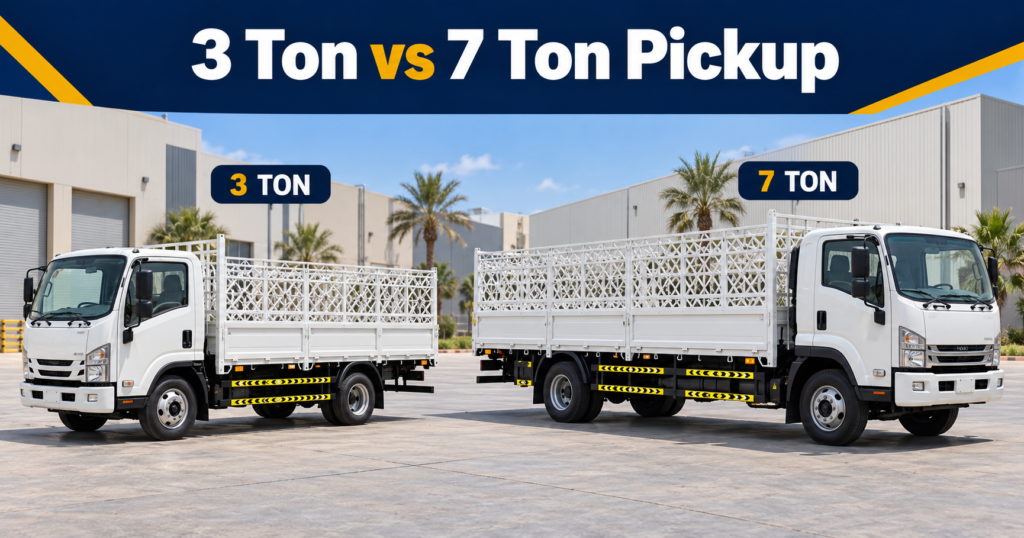
Choosing between a 3 ton vs 7 ton pickup for business cargo in Dubai starts with four checks: loaded weight, cargo dimensions, loading arrangements and access at both locations. A smaller consignment may suit a 3 ton truck, while a heavier or bulkier shipment may need a 7 ton option. This guide explains how to compare them before requesting a quote.
For warehouse transfers, shop deliveries, construction supplies and industrial materials, the wrong vehicle can mean an extra trip, unused space or a truck that cannot reach the unloading point. A useful decision considers the entire delivery, from the supplier’s loading area to the receiving site.
The terms “3 ton pickup” and “7 ton pickup” describe commercial transport categories in local enquiries. They do not confirm the cargo bed measurements or the usable payload of every vehicle. Ask for the specifications of the truck proposed for your booking.
Key Takeaways
- Check total loaded weight, including packaging and pallets, before selecting a truck.
- Compare usable bed space and stacking restrictions as well as tonnage.
- Confirm loading, unloading and vehicle access at both ends of the route.
- Compare the complete job cost: trips, waiting, handling and delivery deadlines.
In This Guide
Quick Answer: 3 Ton vs 7 Ton Pickup
Choose a 3 ton pickup when the complete shipment fits the confirmed payload, usable cargo space and handling arrangements of the proposed truck. Compare a 7 ton pickup when the shipment needs more carrying capacity or floor space. In either case, confirm vehicle specifications, access and unloading before booking; tonnage alone does not establish suitability.
1. Check Weight, Dimensions and Actual Payload
Start with a cargo list. Record each item or pallet, its packaged length, width and height, and its weight. Include crates, pallets and packing materials in the shipment total. If the weight is unknown, obtain it from the supplier, packing list or equipment documentation rather than estimating from appearance.
Payload and gross vehicle weight are different. Gross vehicle weight includes the loaded vehicle; available cargo capacity also depends on the fitted body and equipment. Manufacturer specifications may use different payload definitions. For example, Isuzu UAE’s N-Series specification notes state that the published payload includes rear-body weight. This is why the transport operator should confirm usable cargo capacity for the actual configured vehicle.
Next, check whether the load fits physically. Light display panels or empty containers can fill a truck before reaching its weight limit. Dense materials can reach the payload limit while leaving floor space unused. Neither situation is solved by comparing tonnage alone.
- Measure packaged items, including projections and protective packaging.
- Identify anything that cannot be stacked, tilted or laid flat.
- Provide pallet footprints and heights; pallet count alone is insufficient.
- Describe unusually concentrated loads, such as a single heavy machine.
- Confirm loading clearance and door dimensions when considering an enclosed body.
2. Compare a 3 Ton and 7 Ton Pickup for Your Job
Use the comparison below as a selection guide. The examples describe possible applications, not a guarantee that every truck in either category will accommodate them. Review the 3 ton truck transport service and 7 ton truck transport service alongside your actual shipment details.
| Decision Factor | 3 Ton Pickup | 7 Ton Pickup |
|---|---|---|
| Commercial deliveries | Smaller stock collections and individual business deliveries | Larger consignments or consolidated deliveries |
| Warehouse transfers | Loads that fit the confirmed weight and usable body space | Higher-volume or heavier transfers needing a larger option |
| Construction supplies | Smaller material batches and packaged site supplies | Larger material consignments, subject to load and access checks |
| Space and stacking | Check floor area, height and non-stackable items | Compare the actual larger body; no fixed pallet count applies |
| Access | Check complete truck dimensions and loading position | Check gate clearance, turning room and unloading space |
| Handling equipment | Confirm manual, forklift or other arrangements | Confirm the same; a larger truck does not automatically include a crane or tail lift |
| Trip planning | Can work well for a single small job or planned split deliveries | May consolidate a shipment when capacity and site conditions permit |
| Cost comparison | Compare the full cost of all required trips | Compare one-job pricing, handling and waiting, not vehicle size alone |
Before confirming: Request the usable cargo dimensions, allowable cargo weight, body type and loading equipment for the proposed truck. A “7 ton” enquiry is not confirmation that exactly 7,000 kg can be carried by any vehicle offered.
3. Practical Examples for Business Cargo
Retail stock from warehouse to shop
A compact consignment of cartons may suit a 3 ton truck if its weight, volume and packaging fit. For a larger stock replenishment, compare a 7 ton option against splitting the delivery. Check whether the shop receives goods through a loading bay, service entrance or ground-level delivery point. If goods need an enclosed body, review the box pickup service rather than assuming an open truck provides the required protection.
Dense construction materials
For tiles, cement bags or metal components, obtain the weight of the full consignment before deciding. A short list of heavy items can require more carrying capacity than a much larger pile of lightweight cartons. Compare a 7 ton truck when the confirmed 3 ton option cannot accommodate the shipment, and tell the operator how the materials will be loaded and unloaded.
Bulky exhibition or commercial items
Display units, furniture and packaged fittings may be light but occupy substantial floor space. Supply dimensions and stacking instructions. A larger body can be useful even when the load is not especially heavy, but the receiving location must also accommodate the proposed vehicle.
Machinery or palletised goods
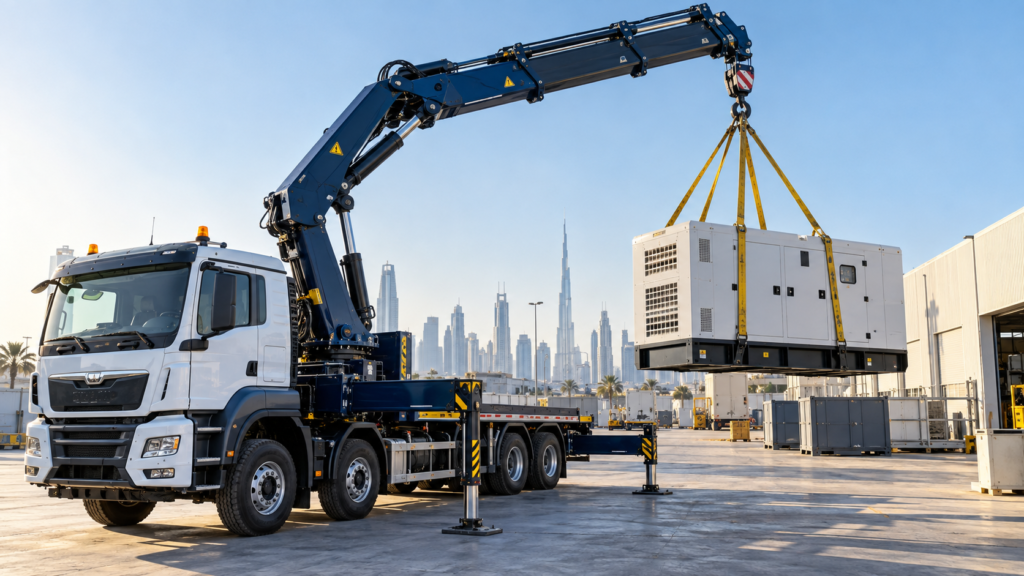
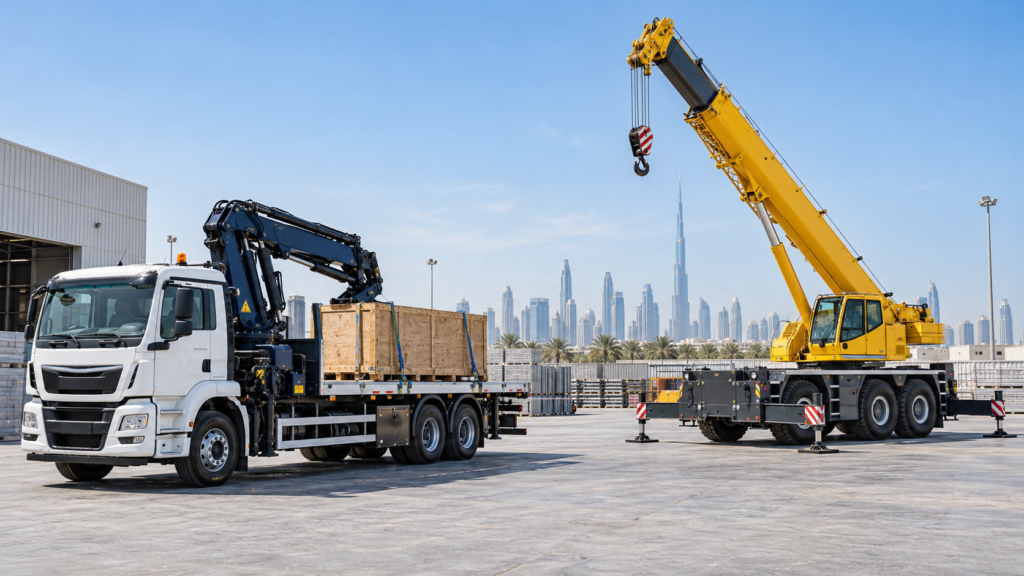
For machinery, share the item weight, footprint, photographs and designated handling points. For pallets, confirm loaded dimensions and available equipment at both ends. Truck tonnage does not provide lifting capability. If the job needs lifting as well as transport, discuss the HIAB crane truck service and its job-specific requirements separately.
4. Compare One Larger Trip With Multiple Smaller Trips
One 7 ton trip may be practical when it can carry the complete shipment and reach both sites. Multiple 3 ton trips may suit staged deliveries, separate receiving windows or sites where the proposed smaller vehicle has better access. The right option depends on the loading plan and the receiving business’s schedule.
Compare the total cost and time for both arrangements. Two smaller trips involve repeated travel and potentially repeated loading, paperwork and queueing. One larger trip can require a longer loading slot or more space at the destination. Ask for both quotations using the same cargo list, route and handling assumptions.
A Simple Decision Process
- Prepare the complete cargo list and packaged measurements.
- Confirm the proposed truck’s usable capacity and body dimensions.
- Check access and unloading arrangements at both locations.
- Compare one larger trip with any workable split-delivery option.
- Confirm the quoted scope and delivery schedule before booking.
5. Plan Dubai Site Access Before Dispatch
A warehouse collection in Al Qusais, a supplier pickup in Al Quoz and a delivery to a commercial building can involve different access arrangements. Provide the exact map pins and receiving instructions. An area name alone may not identify the correct gate, loading bay or vehicle entrance.
Ask the site or building team about gate clearance, turning space, vehicle parking, security registration and unloading hours. Check whether the truck must reverse into a bay and whether the receiving equipment can reach the load. Share entrance photographs if access is difficult to describe.
The operator should check applicable route requirements and current access restrictions for the proposed vehicle and journey. Arrange the delivery window with the receiving team; 24/7 enquiry availability does not mean every building or construction site accepts deliveries at any hour.
6. Prepare Cargo and Confirm the Handling Method
Tell the operator which items are fragile, non-stackable, top-heavy or sensitive to weather. Packaging should suit the cargo and the intended handling method. Do not assume that wrapping cartons or pallets replaces the need for appropriate vehicle load restraint.
Agree who provides loading and unloading equipment, who operates it and where the truck will stand. Forklift availability at collection does not establish availability at delivery. Tail-lift requirements must be assessed separately against the equipment’s capacity, platform size and the receiving conditions.
Load placement, weight distribution and restraint should be assessed by the operator and handling team. General DVSA load-securing guidance explains why load stability and distribution matter. This is a technical reference, not a statement of UAE law; applicable local requirements and site procedures govern the actual job.
7. What Affects a 3 Ton or 7 Ton Transport Quote?
The cheapest vehicle quote is not necessarily the lowest complete-job cost. Request a quotation for the actual shipment and route, then check what is included and what could be charged separately.
- Vehicle size, body configuration and required equipment.
- Pickup and delivery locations, number of stops and required trips.
- Loading and unloading arrangements, labour and equipment.
- Waiting time at supplier gates, warehouses or receiving sites.
- Preferred date, delivery window and urgent scheduling.
- Any applicable tolls, access charges or job-specific requirements.
Ask whether the quote includes the driver, handling assistance and any agreed waiting allowance. Confirm how extra stops, delays or changes to the shipment will be treated. For recurring deliveries, share the frequency and route pattern so the team can review a scheduled arrangement.
Common Mistakes When Comparing Truck Sizes
- Choosing from tonnage without checking usable cargo dimensions.
- Giving pallet counts without loaded size, weight or stacking information.
- Treating every 3 ton or 7 ton truck as the same configuration.
- Assuming the driver, loading crew, forklift or lifting equipment are all included.
- Checking pickup access but overlooking the delivery entrance.
- Comparing one-trip pricing with an incomplete multiple-trip estimate.
8. Send a Complete Booking Enquiry
A complete enquiry helps the team compare options without repeatedly asking for missing details. Use the checklist below when contacting Saeed Noor Trucks Transport L.L.C.. If you are unsure of the vehicle size, describe the shipment and request an assessment rather than choosing a truck by guesswork.
Transport Booking Checklist
- Cargo description and number of items or pallets.
- Total loaded weight, including pallets and packaging.
- Packaged length, width and height, with stacking restrictions.
- Clear photographs of the cargo and any awkward items.
- Exact pickup and delivery map pins and site contacts.
- Entrance clearance, loading bay and vehicle parking details.
- Loading and unloading equipment available at each location.
- Preferred transport date, receiving window and number of stops.
- Required body type, protection and special handling instructions.
Frequently Asked Questions
What is the main difference between a 3 ton and 7 ton pickup?
They are different commercial truck categories used when discussing carrying capacity. The actual difference for your job also includes usable body dimensions, vehicle configuration and access requirements. Confirm the cargo weight and space available on the proposed vehicle instead of relying on the category name alone.
Can a 3 ton pickup carry exactly 3,000 kg of goods?
Do not assume this from the booking label. The allowable cargo load must be confirmed for the actual vehicle, including its fitted body and equipment. Manufacturer payload terminology can include body weight. Send the full shipment weight and ask the operator to confirm whether the proposed truck is suitable.
How many pallets fit in a 3 ton or 7 ton truck?
There is no reliable universal count. Pallet footprint, loaded height, weight, stacking permission and the truck’s usable floor space all affect the answer. Share the measurements of each pallet type and whether pallets can be stacked; the operator can then review an appropriate loading arrangement.
Is one 7 ton trip cheaper than two 3 ton trips?
It depends on the complete job. Compare both quotes using identical cargo, locations, handling and delivery deadlines. Repeated travel, loading and waiting can affect multiple-trip costs, while a larger vehicle may require different access or handling arrangements. Ask for the total quoted cost of each workable option.
Does a larger pickup automatically include a crane or tail lift?
No. Carrying capacity and handling equipment are separate specifications. State whether the cargo will be loaded manually, by forklift or by lifting equipment. Confirm the equipment needed at both locations and whether it is included in the proposed transport arrangement.
Can I request transport from Dubai to another emirate?
You can discuss UAE transport requirements with Saeed Noor Trucks Transport L.L.C. Provide both locations, cargo specifications and the required schedule. The team reviews the proposed vehicle, route, access and availability before confirming the arrangement.
What if I do not know which truck size to book?
Send the cargo list, total weight, packaged measurements, photographs and pickup and delivery details. Explain the loading equipment and site access. These details allow the team to assess a 3 ton, 7 ton or alternative vehicle rather than confirming a size from an incomplete description.
Choose the Truck That Fits the Complete Delivery
The useful answer to 3 ton vs 7 ton pickup is the option that accommodates your shipment, reaches both sites and works with the handling plan. Start with cargo facts, compare the actual vehicle specifications and review the total cost of the delivery. If either option cannot satisfy those checks, discuss another configuration or a planned split shipment.
Need Help Choosing a Pickup for Your Cargo?
Share your cargo weight, dimensions, photographs, pickup location, delivery point and preferred schedule with Saeed Noor Trucks Transport L.L.C. Our team can review the requirement and discuss an available transport option.